Alat bantu mengajar digital yang interaktif.
Immersive Digital Teaching Aid ialah penghasilan alat bantu mengajar (ABM) digital yang mengintegrasikan elemen Realiti Terimbuh (Augmented Reality, AR) bagi meningkatkan pengalaman dan keberkesanan PdP di institusi TVET. Penggunaan teknologi ini membantu menjadikan pembelajaran lebih interaktif, menarik dan mudah difahami melalui gabungan elemen digital dengan situasi pembelajaran sebenar.
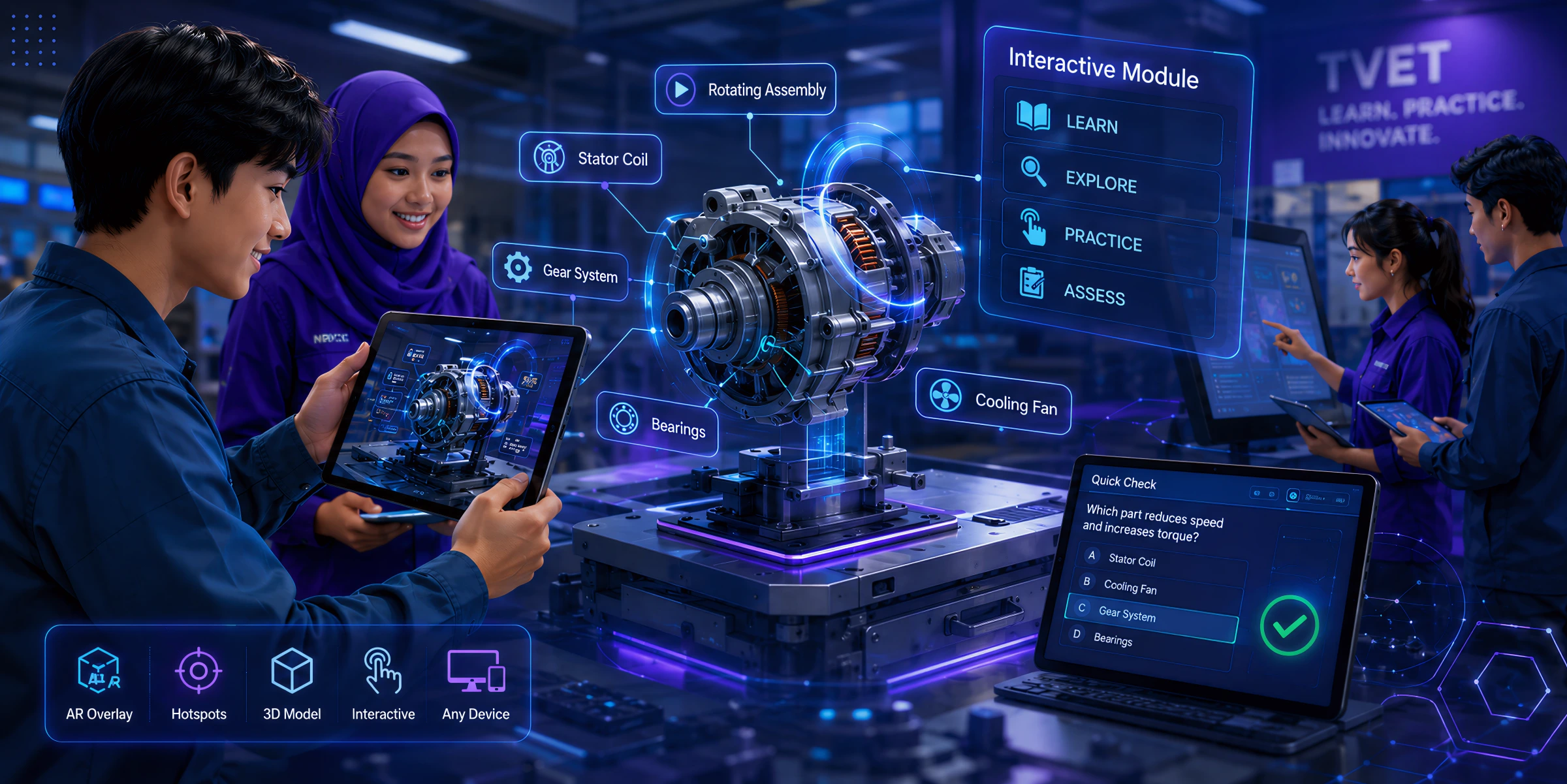
Tujuan kategori ini.
Kategori ini bertujuan meningkatkan keberkesanan PdP melalui pembangunan bahan digital yang interaktif, moden dan menarik, selaras dengan perkembangan teknologi serta keperluan industri semasa.
Kategori ini turut menggalakkan pengajar TVET memanfaatkan teknologi digital dan platform pembelajaran abad ke-21, di samping mengukuhkan perkongsian amalan terbaik digital untuk pembelajaran yang fleksibel dan inklusif.
Kelayakan dan satu syarat kategori.
Penyertaan hendaklah mematuhi syarat umum MIPAC TVET 2026 yang diterangkan di halaman Mengenai dan dalam garis panduan utama pertandingan. Syarat khusus kategori ini ialah projek mesti menggunakan elemen immersive learning, iaitu AR (Augmented Reality) dan unsur interaktiviti lain yang menyokong pengalaman pembelajaran yang lebih aktif.
Spesifikasi penyertaan.
Bentuk penyertaan ialah modul pengajaran digital interaktif dalam Bahasa Melayu atau Bahasa Inggeris, tertumpu pada kemahiran teknikal atau kemahiran insaniah/profesionalisme. Modul perlu merangkumi sekurang-kurangnya satu sub-topik lengkap, selaras dengan silibus, CLO atau LO, mengenal pasti kumpulan sasaran, serta menunjukkan hasil pembelajaran, aktiviti PdP, elemen interaktiviti dan kaedah pentaksiran yang jelas.
Dokumen sokongan.
Selain modul, peserta hendaklah mengemukakan dokumen sokongan yang ditetapkan. Semua pautan, kod QR, fail sokongan dan media terbenam hendaklah kekal aktif serta boleh diuji oleh panel penilai sepanjang tempoh penilaian.
- Laporan projek. Latar belakang, proses pembangunan, impak, serta prompt atau log penggunaan AI jika berkaitan dalam format PDF atau Word.
- Ringkasan projek (extended abstract). Ringkasan pendek tentang projek.
- Poster projek. Paparan visual yang merumuskan modul atau bahan pengajaran.
- Pautan video atau bahan digital. Pautan kepada modul dan video projek.
- Dokumen sokongan lain. Dokumen tambahan lain yang berkaitan bagi menyokong penyertaan.
Aspek penilaian.
Panel pakar TVET menilai setiap penyertaan melalui semakan dokumen dan sesi pembentangan. Aspek penilaian adalah seperti berikut. Wajaran tepat bagi setiap aspek ditetapkan oleh jawatankuasa penilaian dan disenaraikan dalam garis panduan kategori.
- Laporan projek, termasuk log penggunaan AI
- Pematuhan spesifikasi wajib dan penggunaan AI yang beretika
- Pembentangan, termasuk kejelasan dalam menerangkan idea dan menjawab soalan
- Video projek yang menunjukkan aliran pengguna, fungsi utama dan penggunaan modul dalam PdP
- Reka bentuk projek PdP, termasuk UI/UX, struktur navigasi, multimedia, kebolehcapaian, ketepatan kandungan dan pedagogi
- Keaslian, kreativiti dan inovasi
- Impak dan kebolehgunaan, termasuk kebolehskalaan, kelestarian dan keberkesanan PdP
- Potensi penggunaan secara meluas merentas topik dan kursus