Platform nasional untuk inovasi pembelajaran digital TVET.
Pertandingan baharu anjuran CIAST ini membolehkan pengajar TVET di Malaysia mengemukakan inovasi pengajaran dan pembelajaran digital. Projek yang berkualiti boleh dijadikan rujukan oleh komuniti TVET, digunakan oleh institusi lain, dan memberi manfaat kepada lebih ramai pelajar.
Pertandingan nasional pertama anjuran CIAST untuk inovasi pengajaran digital.
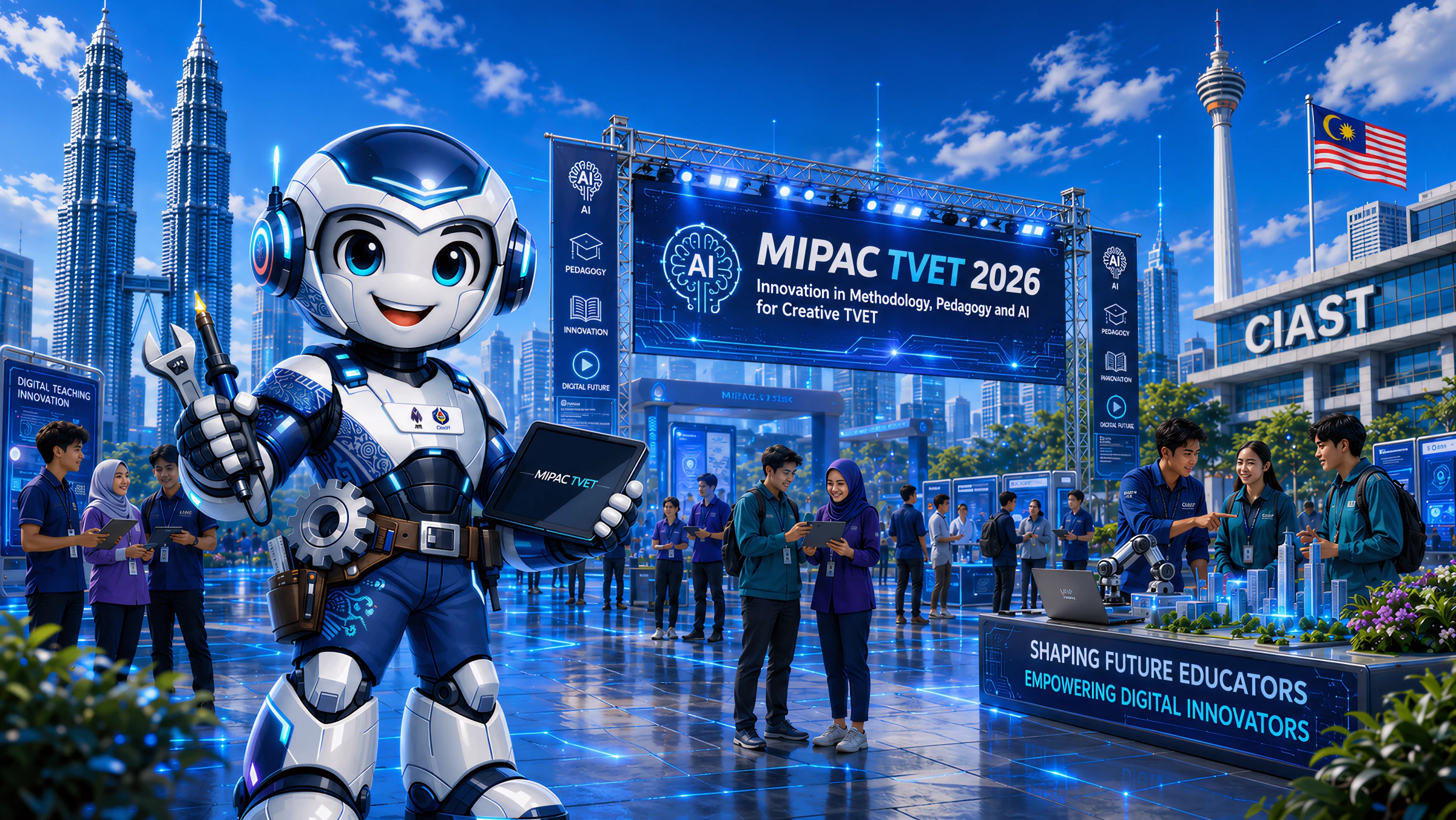
MIPAC TVET 2026, singkatan bagi Innovation in Methodology, Pedagogy and AI for Creative TVET, merupakan edisi pertama pertandingan tahunan baharu anjuran CIAST. Pertandingan ini dibuka kepada pengajar TVET sektor awam dan swasta di seluruh negara untuk mengemukakan amalan pengajaran terbaik serta berkongsi bahan PdP digital yang boleh dirujuk oleh komuniti TVET Malaysia.
Inovasi pengajaran TVET telah lama dilaksanakan di pelbagai institusi, termasuk melalui modul interaktif, video pengajaran, kaedah berbantukan AI, dan bahan PdP digital yang dibangunkan mengikut keperluan pelajar. Namun, bahan tersebut lazimnya digunakan dalam institusi asal sahaja. Melalui dokumentasi dan perkongsian yang teratur, pendekatan yang berkesan boleh menjadi rujukan kepada pengajar TVET di institusi lain.
Dalam MIPAC TVET 2026, projek didaftarkan mengikut kategori, disertakan dengan bahan penyertaan, dan dinilai oleh panel penilai. Projek yang mencapai tahap cemerlang boleh direkodkan dalam bank PdP digital CIAST sebagai bahan rujukan dan penggunaan institusi TVET lain. Projek tersebut juga boleh dipertimbangkan untuk MIPAC TVET Innovation Showcase, perlindungan MyIPO, pengkomersialan, dan Training of Trainers.
Lima objektif utama pertandingan.
Pertandingan ini berasaskan lima matlamat utama. Matlamat ini menjadi asas kepada kategori yang ditawarkan, kaedah penilaian, dan peluang susulan bagi projek terbaik selepas pertandingan. Peserta juga dapat memahami sumbangan projek masing-masing kepada pembangunan pengajaran TVET.
- 01
Meningkatkan kompetensi pengajar TVET dalam teknologi digital, AI, dan pedagogi moden.
Teknologi digital, AI, dan pendekatan pengajaran terkini semakin penting dalam PdP. Pertandingan ini membantu pengajar TVET menggunakan teknologi dan pendekatan tersebut dengan lebih yakin. Penyediaan projek MIPAC TVET turut mengukuhkan kompetensi tersebut.
- 02
Membina budaya inovasi, kreativiti, dan perkongsian amalan terbaik.
Budaya inovasi dan kreativiti tidak terbentuk melalui satu acara sahaja. Melalui penganjuran tahunan dan perkongsian projek pemenang, MIPAC TVET menggalakkan institusi TVET saling belajar, menyesuaikan amalan terbaik, dan membina tradisi perkongsian ilmu merentas edisi.
- 03
Menggalakkan bahan pengajaran yang lebih interaktif, fleksibel, dan berpusatkan pelajar.
TVET memerlukan bahan pengajaran yang interaktif, fleksibel, dan sesuai dengan rentak pembelajaran pelajar. Pertandingan ini menggalakkan pembangunan bahan tersebut merentas keempat-empat kategori, sama ada dalam bentuk pengajaran berbantukan AI, video pendek, konsep ruang latihan masa depan, atau alat bantu interaktif yang imersif.
- 04
Menjadi platform pengiktirafan bagi pengajar TVET yang cemerlang.
Pengajaran yang cemerlang perlu direkodkan dan diberi pengiktirafan supaya dapat menjadi rujukan kepada komuniti TVET yang lebih luas. Melalui MIPAC TVET, pengajar TVET boleh menerima pengiktirafan di peringkat nasional melalui majlis anugerah, sijil, trofi, ruang pengiktirafan pemenang, bank PdP digital CIAST, serta potensi pemilihan untuk MIPAC TVET Innovation Showcase. Fokusnya ialah pengiktirafan dan penyebaran amalan PdP yang berkualiti.
- 05
Mengukuhkan agenda pendigitalan TVET.
Selepas pertandingan, CIAST boleh mempertimbangkan projek terbaik untuk penggunaan lebih luas dalam rangkaian TVET Malaysia, penyesuaian oleh institusi atau bidang lain, serta pengkomersialan di peringkat institusi atau nasional. Langkah ini menyokong agenda pendigitalan TVET Malaysia.
Empat kategori untuk inovasi pengajaran TVET.
Setiap kategori mempunyai fokus, format penghantaran dan kriteria penilaian tersendiri. Peserta perlu memilih kategori yang paling sesuai dengan pendekatan pengajaran yang ingin dikemukakan. Penilaian dibuat bersama projek lain dalam kategori yang sama supaya proses penjurian lebih adil dan seimbang.

AI DigiTeach
16:9 · 3 hingga 5 minit · Format YouTubeKategori ini menumpukan video pengajaran dan pembelajaran yang kreatif, interaktif dan berimpak tinggi, dengan pengintegrasian teknologi digital dan AI dalam pembinaan bahan PdP. Peserta perlu menghantar video pengajaran rakaman selama 3 hingga 5 minit yang dibina dengan bantuan AI. Aplikasi AI yang digunakan perlu diisytiharkan secara telus sebagai sebahagian daripada penyertaan.
Lihat kategori
Short Video Instructor
9:16 · 30 hingga 60 saat · Format sosialKategori ini menumpukan penyampaian kemahiran atau pengetahuan dalam bentuk video pendek menegak. Peserta perlu menyediakan video selama 30 hingga 60 saat untuk TikTok, Reels, YouTube Shorts atau platform yang setara. Kandungan perlu padat, jelas dan mudah diikuti.
Lihat kategori
Future Training Space Ideation
16:9 · 3 hingga 5 minit · Video pembentangan ideaKategori ini menumpukan idea inovatif dan kreatif untuk reka bentuk ruang serta kemudahan latihan masa depan, termasuk peralatan, bilik latihan, perabot dan bilik darjah pintar. Idea boleh dipersembahkan melalui lakaran dan simulasi, dengan tumpuan kepada konsep futuristik, mesra alam dan berasaskan teknologi seperti AI, VR, AR dan IoT. Peserta perlu menghantar video pembentangan idea selama 3 hingga 5 minit.
Lihat kategori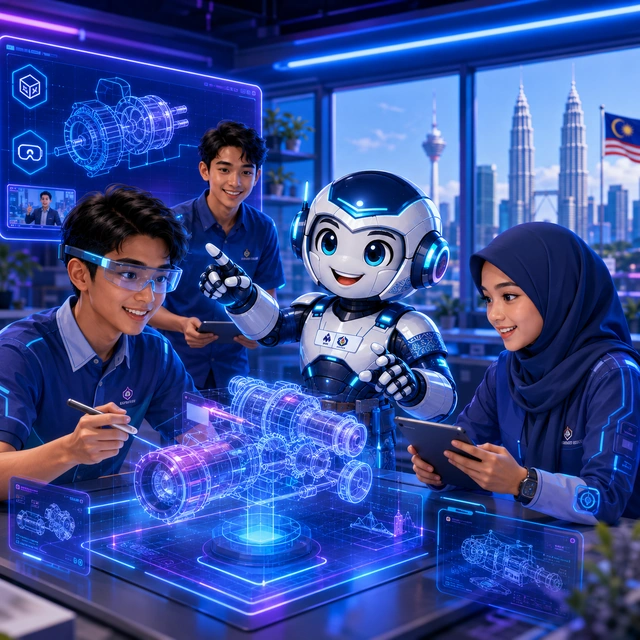
Immersive Digital Teaching Aid
Interaktif · AR · sehingga 500 MBKategori ini menumpukan pembelajaran digital secara amali yang boleh digunakan secara kendiri oleh pelajar. Peserta boleh membina lapisan AR, panduan interaktif, atau modul berfungsi yang boleh dibuka pada peranti pelajar. Bahan yang perlu dihantar ialah alat bantu mengajar digital yang interaktif, dalam bentuk fail atau pakej, berserta video pendek yang menunjukkan pengalaman penggunaannya.
Lihat kategoriSyarat penyertaan dan keperluan projek.
MIPAC TVET 2026 terbuka kepada komuniti pengajar TVET di seluruh Malaysia. Jika anda mengajar kemahiran secara sepenuh masa, sama ada di institut kemahiran awam, politeknik, kolej komuniti, kolej vokasional, atau akademi swasta, anda layak menyertainya. Bahagian ini menerangkan syarat kelayakan, pembentukan pasukan, keperluan hasil kerja, dan golongan yang tidak boleh menyertai.
Siapa yang layak
- Terbuka kepada semua pengajar TVET di Malaysia, sama ada di institusi atau agensi latihan awam mahupun swasta.
- Tiada had umur, sama ada had minimum atau maksimum. Pertandingan ini menilai hasil kerja, bukan peringkat kerjaya.
- Perlu berkhidmat sepenuh masa dengan institusi, sama ada tetap atau kontrak, sepanjang tempoh pertandingan.
Komposisi pasukan
- Saiz pasukan. Penyertaan secara individu, berdua, atau bertiga diterima. Pasukan yang melebihi tiga orang tidak dibenarkan.
- Lebih daripada satu projek boleh diuruskan. Satu akaun boleh mendaftarkan lebih daripada satu projek, sama ada dalam kategori yang berbeza atau kategori yang sama, dengan pasukan berasingan bagi setiap projek. Setiap individu hanya boleh berada dalam satu pasukan, jadi setiap peserta hanya bertanding sekali bagi setiap edisi.
- Tiada had institusi. Sesebuah institusi boleh menghantar seberapa banyak projek merentas mana-mana gabungan kategori.
Siapa yang tidak boleh menyertai
- Urus setia.
- Panel penilai.
- Sesiapa yang terlibat secara langsung dalam proses penilaian.
Syarat hasil kerja
- Hasil kerja asli. Projek mestilah ciptaan peserta sendiri. Projek yang pernah memenangi MIPAC TVET dalam edisi terdahulu tidak layak dipertandingkan semula, kecuali jika terdapat penambahbaikan yang signifikan dan dapat dibuktikan oleh peserta.
- Skop yang berfokus. Penyertaan hendaklah memberi tumpuan kepada Work Activity atau kemahiran yang spesifik berdasarkan NOSS yang berkaitan. Keutamaan diberikan kepada pembangunan inovasi yang menghuraikan Work Activity tersebut secara mendalam, dan bukan meliputi keseluruhan Competency Unit atau modul.
- Maklumat NOSS dinyatakan. Kandungan hendaklah tertumpu kepada hanya satu (1) aktiviti kemahiran atau konsep di dalam National Occupational Skills Standard (NOSS). Penyertaan yang tidak menyatakan Kod NOSS, Tajuk NOSS, Competency Unit dan Work Activity dengan jelas boleh dikategorikan sebagai tidak lengkap semasa semakan pematuhan penyertaan.
- Tiada kandungan sensitif. Penghantaran yang mengandungi bahan sensitif dari segi politik, agama, atau budaya tidak diterima.
- Penghantaran yang lengkap sahaja. Penghantaran yang tidak lengkap boleh ditolak.
- Tiada plagiarisme. Plagiarisme yang dikesan menjadi sebab untuk hilang kelayakan.
- Aset yang bersumber dengan betul. Setiap aset yang digunakan, termasuk audio, grafik, video, imej dan kandungan, mestilah asli atau mempunyai lesen yang sah. Sumber asal perlu diberi kredit. Pelanggaran hak cipta boleh menyebabkan penyertaan hilang kelayakan.
- Penggunaan AI diisytiharkan. Penggunaan AI dibenarkan dan digalakkan, tetapi aplikasi AI yang digunakan untuk membina projek, termasuk platform, aplikasi dan model generatif, mestilah diisytiharkan sebagai sebahagian daripada penghantaran. Penggunaan AI perlu telus, beretika dan bertanggungjawab.
Aliran pertandingan secara ringkas.
Garis masa pertandingan bermula dengan pendaftaran dan berakhir dengan majlis anugerah pada November. Tarikh di bawah membantu peserta merancang kerja dari awal. Selepas mendaftar dan log masuk, portal peserta akan menyediakan panduan bagi setiap langkah, termasuk peringatan, penjejakan tarikh akhir, dan kemudahan muat naik untuk dokumen serta video.
Pendaftaran & Abstrak
Daftar projek anda dan hantar abstrak menerusi sistem MIPAC TVET dalam tempoh pendaftaran selama enam minggu.
Saringan
Urus setia menyemak setiap abstrak yang dihantar berdasarkan syarat kelayakan.
Projek Layak Diumumkan
Projek yang lulus saringan akan dimaklumkan dan beralih ke peringkat penghantaran penuh.
Penghantaran Penuh
Projek yang layak memuat naik bahan lengkap, termasuk poster, laporan projek, dan dokumen sokongan.
Penilaian
Panel penilai menilai setiap projek yang layak dalam dua peringkat.
Pemenang Diumumkan
Keputusan diterbitkan sebaik pemarkahan dan semakan urus setia selesai.
Majlis Anugerah
Pemenang MIPAC TVET 2026 diraikan pada majlis anugerah.
Cara penilaian dijalankan.
Setiap projek yang layak dinilai melalui dua peringkat, iaitu penilaian dokumen dan penilaian pembentangan projek. Panel pakar TVET menggunakan skala lima tahap: Cemerlang, Baik, Sederhana, Memuaskan dan Lemah. Kriteria khusus serta wajaran pemarkahan ditetapkan mengikut kategori supaya penilaian sepadan dengan format hasil kerja. Keputusan panel adalah muktamad.
Rubrik penilaian
Setiap kriteria dinilai pada lima tahap yang sama, daripada Lemah hingga Cemerlang, supaya penilaian panel kekal konsisten. Maksud setiap tahap ditakrifkan mengikut kriteria, dan ditetapkan mengikut kategori oleh jawatankuasa penilaian. Contoh di bawah menunjukkan penggunaan skala bagi satu kriteria.
Hak penggunaan dan tindakan susulan selepas penghantaran.
Bahagian ini menerangkan hak CIAST terhadap bahan penyertaan serta tindakan susulan yang boleh dipertimbangkan untuk projek pemenang. Sila semak bahagian ini sebelum menghantar penyertaan, terutamanya jika soal harta intelek penting bagi anda.
Hak penggunaan kepada CIAST
Dengan menyertai pertandingan ini, peserta memberikan kebenaran kepada CIAST untuk menggunakan, mempamerkan, menerbitkan dan menyesuaikan bahan penyertaan bagi tujuan pendidikan, promosi, penyelidikan dan pembangunan TVET. Hak penggunaan ini adalah bersifat bukan eksklusif dan tidak menjejaskan pemilikan harta intelek peserta atau institusi peserta.
Perlindungan harta intelek
CIAST boleh membantu atau menguruskan perlindungan harta intelek bagi projek yang berpotensi, termasuk pendaftaran melalui MyIPO, tertakluk kepada budi bicara penganjur dan persetujuan pihak berkaitan. Sebarang pendaftaran hendaklah mengambil kira pengiktirafan kepada pencipta, penyumbang dan pemilik inovasi yang sah.
Tindakan susulan bagi projek pemenang
Projek yang berpotensi tinggi boleh dipertimbangkan untuk dimasukkan ke dalam bank PdP digital CIAST, dipamerkan di MIPAC TVET Innovation Showcase pada peringkat institusi, kebangsaan atau antarabangsa, dimasukkan ke dalam repositori inovasi, diterbitkan sebagai dokumentasi, atau dikongsi dengan institusi TVET lain. Sebarang cadangan pengkomersialan hendaklah dibuat melalui persetujuan atau perjanjian bertulis antara CIAST dengan pemilik inovasi.
Training of Trainers (TOT)
CIAST boleh memilih projek pemenang yang sesuai untuk program Training of Trainers (TOT). Melalui program ini, teknik, kaedah atau inovasi yang dibangunkan boleh dikongsi dengan pengajar TVET lain supaya manfaatnya dapat diperluas kepada institusi dan komuniti TVET.
Soalan lain yang lazim ditanya.
Bahagian ini menyenaraikan soalan lazim berkaitan penyertaan, penghantaran, penilaian, dan hak bahan penyertaan. Jika jawapan yang dicari tiada di sini, urus setia MIPAC TVET boleh dihubungi melalui halaman Hubungi.
Penyertaan dan pembentukan pasukan
Siapakah yang layak menyertai MIPAC TVET 2026?
Semua pengajar TVET di Malaysia yang berkhidmat sepenuh masa di institusi latihan masing-masing boleh menyertai, sama ada di sektor awam atau swasta, tetap atau kontrak. Tiada had umur. Pengecualian hanya terpakai kepada urus setia, panel penilai, dan individu yang terlibat secara langsung dalam proses penilaian.
Adakah dibenarkan bagi Pegawai Penilai Dalaman (PPD) bekerjasama dengan Pegawai Penilai (PP) untuk menyertai pertandingan ini?
Boleh, dengan syarat kedua-dua pegawai berkhidmat di institusi latihan yang sama. Setiap kumpulan dibenarkan terdiri daripada 1 hingga 3 orang ahli.
Adakah kumpulan yang terdiri daripada gabungan pensyarah TVET dan pensyarah umum (seperti Jabatan Pengajian Am/Pendidikan Islam bersama pensyarah teknikal) layak untuk bertanding?
Tidak boleh. Pertandingan ini hanya terbuka kepada pengajar TVET.
Adakah dibenarkan untuk membentuk kumpulan yang terdiri daripada ahli daripada pelbagai institusi yang berbeza?
Tidak dibenarkan. Kumpulan hendaklah ditubuhkan dengan ahli daripada institut yang sama.
Bolehkah saya menyertai lebih daripada satu projek?
Tidak. Setiap individu hanya boleh menjadi peserta bagi satu projek dalam setiap edisi. Pemegang akaun boleh menguruskan beberapa projek, tetapi sebagai peserta, nama anda hanya boleh didaftarkan dalam satu pasukan sahaja.
Adakah penyertaan dikenakan yuran?
Tidak. Penyertaan MIPAC TVET 2026 adalah percuma untuk semua pengajar yang layak.
Bolehkah saya menyertai pertandingan secara berkumpulan?
Boleh. Projek boleh didaftarkan secara individu atau secara berkumpulan dengan maksimum tiga orang pengajar.
Bolehkah satu akaun mendaftarkan lebih daripada satu projek?
Boleh. Satu akaun boleh mendaftarkan lebih daripada satu projek, sama ada dalam kategori yang berbeza atau kategori yang sama. Setiap projek mempunyai pasukan sendiri dan dinilai secara berasingan. Namun, setiap individu hanya boleh menjadi peserta bagi satu projek dalam setiap edisi.
Bolehkah institusi saya menghantar lebih daripada satu projek?
Boleh. Tiada had jumlah projek bagi sesebuah institusi. Institusi boleh menghantar projek merentas mana-mana gabungan kategori.
Penghantaran dan format
Apakah bahan yang perlu dihantar?
Bahan utama termasuk laporan projek dalam format PDF sehingga 10 MB, video projek mengikut format kategori, serta dokumen sokongan yang berkaitan. Sesetengah kategori turut memerlukan atau membenarkan poster, prototaip, fail sumber, pautan platform, atau bahan tambahan lain. Borang permohonan akan mengumpulkan butiran pemohon, institusi, tajuk projek, kategori pilihan dan bahan khusus kategori.
Bagaimanakah cara untuk mendapatkan format laporan dan dokumen-dokumen sokongan yang berkaitan?
Format dokumen sokongan dan maklumat lanjut boleh diakses serta dimuat turun melalui Sistem Permohonan MIPAC TVET di laman web rasmi http://mipactvet.ciast.gov.my.
Selain video utama, apakah senarai lampiran atau dokumen wajib yang perlu disediakan?
Dokumen sokongan wajib yang perlu dikemukakan merangkumi laporan projek, ringkasan projek (Extended Abstract), poster projek, pautan video/bahan digital, serta dokumen tambahan lain yang berkaitan. Laporan projek juga perlu mengandungi prompt atau log penggunaan AI.
Bagaimanakah prosedur untuk mendapatkan kod NOSS?
Kod NOSS, Tajuk NOSS, Competency Unit (CU), dan Work Activity (WA) perlu rujuk dokumen NOSS yang dibangunkan oleh Jabatan Pembangunan Kemahiran (JPK) bagi bidang kemahiran berkaitan. Maklumat lengkap ini wajib dinyatakan dalam laporan projek.
Bagaimana jika fail saya melebihi had muat naik?
Gunakan pautan Google Drive awam sebagai gantian. Pastikan pautan tersebut ditetapkan kepada akses umum supaya panel penilai boleh membukanya tanpa permintaan kebenaran. Pautan yang terkunci akan dikira sebagai penghantaran tidak lengkap.
Adakah bahan penyertaan perlu baharu, atau bolehkah bahan yang pernah digunakan dalam PdP dihantar?
Boleh. Bahan yang pernah digunakan dalam kelas masih boleh dihantar jika bahan tersebut ialah hasil kerja asli anda.
Adakah projek yang pernah menyertai pertandingan lain dibenarkan menyertai pertandingan ini?
Projek yang pernah menyertai pertandingan inovasi lain adalah dibenarkan. Walau bagaimanapun, projek yang pernah memenangi MIPAC TVET dalam edisi terdahulu tidak layak dipertandingkan semula, kecuali jika terdapat penambahbaikan yang signifikan dan dapat dibuktikan oleh peserta. Penganjur berhak menentukan kelayakan penyertaan tersebut.
Adakah projek saya perlu meliputi keseluruhan modul?
Tidak. Projek boleh memberi tumpuan kepada satu topik, satu aktiviti kemahiran, atau satu konsep daripada NOSS. Pertandingan ini mengutamakan penghuraian yang mendalam berbanding liputan yang terlalu luas.
Adakah penyertaan perlu menyatakan maklumat NOSS yang khusus?
Ya. Kandungan hendaklah tertumpu kepada hanya satu (1) aktiviti kemahiran atau konsep di dalam National Occupational Skills Standard (NOSS). Penyertaan yang tidak menyatakan Kod NOSS, Tajuk NOSS, Competency Unit dan Work Activity dengan jelas boleh dikategorikan sebagai tidak lengkap semasa semakan pematuhan penyertaan.
Bilakah pendaftaran ditutup?
Pendaftaran dan penghantaran abstrak ditutup pada 8 September 2026. Saringan dijalankan dari 9 hingga 11 September, dan projek yang layak kemudian diberi tempoh dari 15 September hingga 2 Oktober untuk memuat naik bahan penuh seperti poster, laporan dan dokumen sokongan. Sediakan ruang masa yang mencukupi untuk setiap tempoh ini.
Penggunaan AI dan keaslian
Bolehkah saya menggunakan aplikasi AI dalam projek?
Boleh. Penggunaan AI dibenarkan dalam pembangunan bahan penyertaan, dengan syarat penggunaannya beretika, telus dan bertanggungjawab seperti yang dinyatakan dalam Seksyen 14 Garis Panduan Pertandingan. AI DigiTeach ialah kategori yang khusus tentang pengintegrasian AI dalam pengajaran, tetapi aplikasi AI juga boleh digunakan dalam kategori lain selagi diisytiharkan.
Adakah saya perlu mengisytiharkan aplikasi AI yang saya gunakan?
Ya. Peserta mesti mengisytiharkan penggunaan AI dalam projek, termasuk platform, aplikasi dan model yang digunakan. Pengisytiharan ini ialah sebahagian daripada penghantaran, bukan maklumat tambahan pilihan. Kegagalan mengisytiharkan penggunaan AI yang dikenal pasti kemudian boleh menyebabkan penyertaan hilang kelayakan.
Adakah penganjur akan menyemak kandungan yang dijana AI?
Penganjur berhak menjalankan semakan plagiarisme dan pengesahan kandungan yang dijana AI bagi semua penghantaran. Penyalahgunaan AI, pengisytiharan palsu, atau kandungan pihak ketiga yang disembunyikan boleh menyebabkan penyertaan hilang kelayakan.
Penilaian dan keputusan
Bagaimanakah projek saya dinilai?
Garis Panduan Pertandingan menetapkan lapan kriteria utama: kandungan reka bentuk, keaslian dan kreativiti, video projek, impak dan kebolehgunaan, potensi penggunaan meluas, laporan projek, pematuhan spesifikasi wajib, dan pembentangan. Setiap kriteria menggunakan skala lima peringkat, iaitu Cemerlang, Baik, Sederhana, Memuaskan dan Lemah. Pecahan pemarkahan ditetapkan mengikut kategori dan dinyatakan dalam Garis Panduan Pertandingan kategori masing-masing.
Apakah yang berlaku semasa sesi penilaian pembentangan projek?
Pasukan anda akan membentangkan projek kepada panel penilai secara dalam talian dalam tempoh penilaian pembentangan, iaitu 5 hingga 16 Oktober 2026. Slaid, video projek atau demonstrasi ringkas boleh digunakan semasa sesi tersebut. Slot masa dan pautan sesi akan dimaklumkan melalui portal peserta.
Apakah bentuk ganjaran atau hadiah yang ditawarkan bagi pemenang pertandingan ini?
Pemenang bagi setiap kategori akan menerima pingat, sijil penghargaan, dan wang tunai. Maklumat lanjut mengenai jumlah wang tunai akan dimaklumkan dari semasa ke semasa.
Adakah sijil penghargaan akan diberikan kepada semua peserta yang mengambil bahagian?
Semua peserta yang tersenarai dalam Projek Layak yang telah melalui proses tapisan (screening) dan pemenang akan menerima sijil penghargaan.
Bolehkah saya merayu keputusan penilaian?
Tidak. Keputusan panel penilai adalah muktamad. Rubrik, pemberat dan proses pemarkahan disediakan bagi memastikan penilaian dibuat secara adil dan konsisten.
Bilakah keputusan boleh dilihat?
Keputusan projek boleh dilihat di dalam portal peserta MIPAC TVET pada 16 Oktober 2026. Pengiktirafan umum bagi pemenang akan berlangsung semasa majlis anugerah MIPAC TVET 2026 pada November 2026.
Adakah orang awam akan melihat markah saya?
Tidak. Markah berangka kekal di dalam sistem penilaian. Peserta hanya melihat keputusan projek masing-masing di dalam portal. Halaman keputusan awam boleh memaparkan kedudukan, pangkat dan kategori anugerah yang diterbitkan, tetapi bukan markah terperinci.
Hak, harta intelek, dan langkah seterusnya
Apakah hak yang dipegang CIAST ke atas bahan yang saya hantar?
Dengan menyertai pertandingan, semua bahan yang dihantar tertakluk kepada hak penggunaan oleh penganjur. CIAST berhak menggunakan, mempamerkan, menerbitkan, mengadaptasi, atau mengkomersialkan bahan tersebut bagi tujuan pendidikan, promosi, penyelidikan, dan pembangunan TVET. CIAST juga boleh mempertimbangkan perlindungan harta intelek, termasuk pendaftaran MyIPO, bagi projek yang berpotensi, atas budi bicara penganjur. Rujuk Seksyen 6.11 dan Seksyen 6.12 Garis Panduan Pertandingan rasmi.
Bagaimana jika saya menggunakan aset pihak ketiga dalam projek saya?
Anda bertanggungjawab memastikan setiap aset yang digunakan, seperti audio, grafik, video, imej atau sumber kandungan, adalah milik anda atau mempunyai lesen yang sah. Sumber asal perlu diberi kredit. Pelanggaran hak cipta boleh menyebabkan penyertaan hilang kelayakan.
Apakah yang berlaku kepada projek pemenang selepas pertandingan?
Projek yang berpotensi tinggi boleh direkodkan dalam bank PdP digital CIAST, dipamerkan di MIPAC TVET Innovation Showcase pada peringkat institusi, nasional atau antarabangsa, dimasukkan ke dalam repositori inovasi, atau diterbitkan sebagai dokumentasi. Projek tersebut juga boleh dikongsi dengan institusi TVET lain dan dipertimbangkan untuk pendaftaran MyIPO atau pengkomersialan. Sebahagian projek juga boleh dipilih untuk Training of Trainers (TOT).
Apakah yang boleh menyebabkan projek hilang kelayakan?
Plagiarisme, pelanggaran hak cipta, maklumat palsu, penggunaan AI yang tidak diisytiharkan, dan penyalahgunaan AI boleh menyebabkan penyertaan hilang kelayakan. Penghantaran yang tidak lengkap boleh ditolak. Kandungan sensitif tidak dibenarkan. Penganjur berhak membatalkan penyertaan jika isu dikenal pasti kemudian, termasuk selepas keputusan diterbitkan.